Pool Inspection Before Buying a House in Miami
Posted by DG Pool Supply on Jun 10th 2026
Buying a home with a swimming pool in Miami can be exciting, but it can also be risky if the pool is not properly inspected before closing. A pool may look beautiful in pictures, but hidden problems with the pump, filter, plumbing, lights, heater, automation, pool surface, or leaks can cost thousands of dollars after you buy the property.
Before purchasing a house with a pool, it is important to schedule a professional pool inspection so you understand the real condition of the swimming pool and pool equipment.
At DG Pool Supply, we help Miami homebuyers inspect pool equipment, pool lights, automation systems, heaters, filters, pumps, salt systems, plumbing, and visible pool condition before making a major investment.
Why You Need a Pool Inspection Before Buying a House
A standard home inspection may not fully check the condition of the pool equipment. Many inspectors only look at the pool visually and may not test every component the way a pool professional would.
A pool inspection can help identify problems such as:
- Old or noisy pool pump
- Damaged or leaking filter
- Broken pool lights
- Bad salt system
- Heater not working
- Pool automation issues
- Plumbing leaks
- Bad valves or check valves
- Surface stains or rough pool finish
- Cracked tile or coping
- Poor water circulation
- Unsafe electrical connections
- Equipment installed incorrectly
- Signs of hidden repair costs
A pool can look clean but still have expensive problems behind the equipment pad.
Pool Equipment Inspection
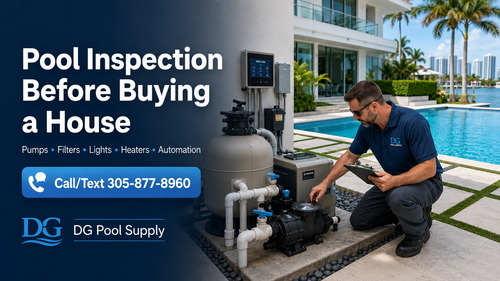
The pool equipment is one of the most important parts of the inspection. Replacing or upgrading pool equipment can get expensive, especially if several components are old or failing.
During a pool equipment inspection, important items to review include:
- Pool pump condition
- Filter condition
- Heater or heat pump operation
- Salt chlorinator condition
- Automation system
- Electrical panel and timers
- Pool light transformer
- Valves and plumbing
- Leaks around equipment
- Proper water flow
- Noise or vibration from pump
- Equipment age and installation quality
If the equipment is outdated, this can become a negotiation point before closing.
Pool Pump Inspection
The pool pump is the heart of the pool system. If the pump is old, noisy, leaking, or inefficient, the new homeowner may need a replacement soon.
Common pump issues include:
- Loud operation
- Leaks around seals
- Motor overheating
- Poor water flow
- Old single-speed pump
- Cracked pump housing
- Bad wiring
- Pump not priming correctly
A variable speed pool pump upgrade may be recommended if the existing pump is old or inefficient.
Pool Filter Inspection
The pool filter keeps the water clean. A damaged or dirty filter system can cause cloudy water, poor circulation, and higher maintenance costs.
Items to check include:
- Filter type
- Filter size
- Cracks or leaks
- Pressure gauge
- Cartridge condition
- DE or sand filter condition
- Clamp condition
- Air relief valve
- Signs of poor maintenance
A bad filter can make the pool harder to maintain after closing.
Pool Light Inspection
Pool lights are another common issue in older homes. Many pools have lights that do not work, flicker, leak water, or trip the breaker.
A pool light inspection should check:
- If the light turns on
- If the light flickers
- If the fixture has water inside
- If the GFCI trips
- Transformer condition
- Voltage compatibility
- Old incandescent lights
- LED upgrade options
- Nicheless light compatibility
Pool light replacement can be a great upgrade, but it should be priced correctly before buying the home.
Pool Heater Inspection
Many Miami homes have pool heaters or heat pumps, but not all of them work correctly. A heater can look installed but may not actually heat the pool.
A heater inspection may include:
- Checking if the heater powers on
- Checking for error codes
- Looking for water leaks
- Checking age and condition
- Reviewing electrical or gas connection
- Checking water flow
- Looking for corrosion
- Confirming heating performance
A non-working pool heater can be an expensive surprise after closing.
Salt System Inspection
Saltwater pools are popular in Miami, but salt systems need to be inspected carefully. A bad salt cell or control board can cause chlorine problems and unexpected replacement costs.
Things to check include:
- Salt cell condition
- Salt level reading
- Control panel operation
- Error lights
- Flow sensor
- Cell age
- Scale buildup
- Wiring condition
- Chlorine production
If the salt system is not working, the pool may require immediate service or replacement.
Pool Automation Inspection
Smart pool automation can make pool ownership easier, but outdated or broken systems can be frustrating and expensive to fix.
A pool automation inspection should review:
- Automation panel condition
- App or WiFi connection
- Relays
- Valve actuators
- Pool/spa mode
- Light control
- Heater control
- Pump schedule
- Salt system connection
- System compatibility
If the home has a spa, automation is even more important because spa mode depends on valves, actuators, heater control, and proper plumbing.
Pool Surface, Tile and Coping Inspection
The pool interior should also be reviewed before buying a house. A pool finish that looks old, rough, stained, or damaged may need resurfacing.
Visible items to inspect include:
- Rough pool surface
- Stains
- Cracks
- Hollow spots
- Missing tile
- Loose coping
- Damaged grout
- Calcium buildup
- Rust stains
- Worn steps or benches
- Spa surface condition
Pool resurfacing, new tile, coping repairs, and remodeling can become major expenses, so it is better to know before closing.
Pool Plumbing and Leak Concerns
Leaks are one of the biggest concerns when buying a house with a pool. Some leaks are visible around equipment, while others may be hidden underground.
Warning signs include:
- Water level dropping too fast
- Air bubbles in return lines
- Wet areas near equipment
- Pump losing prime
- Cracked plumbing
- Leaking valves
- Constant need to refill the pool
- High water bill
If a leak is suspected, further leak detection may be recommended.
What a Pool Inspection Can Help You Negotiate
A pool inspection can help you understand the real condition of the pool before closing. If problems are found, you may be able to negotiate repairs, credits, or a better purchase decision.
Common negotiation items include:
- Pool pump replacement
- Filter replacement
- Pool light replacement
- Heater repair or replacement
- Salt system replacement
- Automation upgrade
- Pool resurfacing
- Tile repair
- Plumbing repair
- Safety corrections
- Equipment pad upgrades
Even if the seller does not repair everything, you will know what to expect after buying the property.
Miami Pool Inspection for Homebuyers
Miami pools are exposed to heat, humidity, storms, salt air, and heavy year-round use. Because of this, pool equipment and finishes can wear down faster when they are not maintained correctly.
A professional pool inspection before buying a house can help protect you from unexpected repair costs and give you a better understanding of the property.
Why Choose DG Pool Supply?
DG Pool Supply understands pool equipment, lights, automation, heaters, salt systems, pool finishes, and modern pool upgrades. We help homeowners and buyers identify potential pool problems and provide options for repairs, replacements, and upgrades.
We can help with:
- Pool equipment inspections
- Pump inspections
- Filter inspections
- Salt system inspections
- Pool light inspections
- Heater inspections
- Automation inspections
- Pool remodeling options
- Pool resurfacing estimates
- Equipment upgrade recommendations
Schedule a Pool Inspection Before Closing
Before you buy a house with a pool in Miami, make sure you know the true condition of the pool and equipment. A pool inspection can help you avoid surprises and plan for any repairs or upgrades before closing.
Call/Text DG Pool Supply: 305-877-8960
Pool Inspection • Pool Equipment • Pool Lights • Automation • Heaters • Salt Systems
Serving Miami and surrounding areas